All Categories
Featured
Table of Contents
Organization R&D provides speed and market relevance, while traditional R&D supplies depth for groundbreaking innovations. Industries like pharmaceuticals show the need for both: traditional R&D for molecular developments, and Business R&D to establish sustainable revenue designs for new treatments. Just look at how revolutionary AI as an innovation has actually been, yet over 85% of AI startups will be out of business in 3 years due to the fact that they have actually not discovered a sustainable service design.
The most successful business foster synergy in between these 2 R&D methodologies. A sketch from Alex Osterwalder comparing the 2 approaches Aand discuss potential item development: Our market research shows a strong interest in a clever home security system. Possible clients have budgets of around $500. What would advancement involve? Well, we're looking at around $2 million in development expenses and a two-year timeline.
That's longer than suitable, offered market volatility. We also identified interest in wise thermostats, voice-controlled lighting, and water leakage detection systems. Are there any quicker options? Hmm We could establish the wise thermostat utilizing existing innovation much faster and cost-effectively. Interesting. Let's conduct further research study to identify which includes consumers worth most.
Securing Your Pipeline From Modern Cyber Espionage Strategies
Boosting Performance in Enterprise Hubs
Let us understand if you require a model. Let's utilize storyboards to gather initial feedback, then return with more specific demands. As the rate of organization speeds up, integrating R&D with service method will become significantly essential.
By understanding the strengths and constraints of each method, business can construct a robust innovation method that drives immediate and sustainable growth. The future of innovation depends on this hybrid model, where conventional R&D supplies the deep, fundamental insights needed for development science and innovations, and business R&D ensures that these developments are closely lined up with market needs and can be advertised.
This article has been edited from the initial published on.
Can AI Fully Replace Conventional Research Study Approaches by 2026?Boston, MA, 10 August 2020 FCLTGlobal, a non-profit company that establishes research and tools that motivate long-term service and investing, today published a new report highlighting prospective modifications in the way business and investors approach corporate R&D costs. Financing the Future: Investing in Long-horizon Development recommends, based upon market information from 2009-2018, that a downturn in R&D returns is an outcome of a shorter-term focus with regard to ingenious projects undertaken by public companies.
Shortening Product Cycles in Enterprise R&D
Between 2009-2018, total global R&D spending grew from $374 billion to $778 billion. But the performance of that extra financial investment has actually been declining an evaluation of the pharmaceutical market in specific discovers that the expenses to bring an asset to market had actually increased to $2.2 billion in 2018 while returns on R&D investment had actually fallen to 1.9 percent.
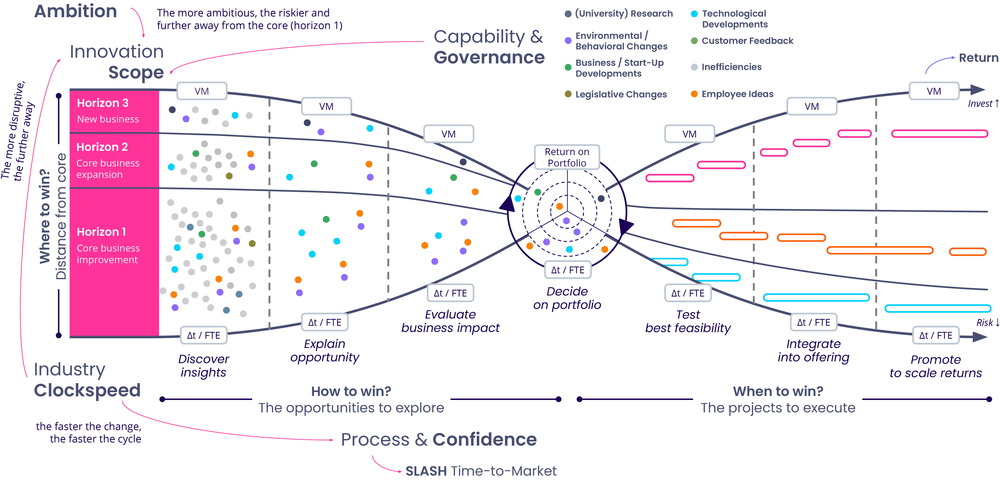
In the face of such pressure, corporate management teams tend to cut long-horizon projects initially. This propensity leaves business and financiers with unbalanced development portfolios, favoring short-term tasks that provide more returns that are lower however more reputable. "Overweighting of short-term jobs sacrifices substantial return possible finding brand-new methods to manage R&D investments could rebalance portfolios and deliver better returns for companies, their financiers and society," said Sarah Keohane Williamson, CEO of FCLTGlobal.
Both are vital." Prior research from FCLTGlobal suggests companies that reinvest a greater portion of their incomes internally, consisting of into R&D jobs, exceed their peers by 9 percent annually usually. The report proposes alternative ways to structure, worth, and manage long-horizon R&D in such a way that both business and their investors can optimize their portfolios, including: Allowing members of the R&D group to work on multiple projects at the same time to motivate a more unbiased, portfolio-oriented viewpoint Using efficiency metrics for brief-, medium-, and long-horizon projects that acknowledge and represent the distinctions in task profile Showing investors the breakdown of R&D budget plan by expected time to market Permitting "quick failure" to reduce behavioral predispositions Together with these recommendations, FCLTGlobal has developed an interactive that enables corporate boards, executives, and threat committees to identify their optimal R&D allowance between short, mid, and long range jobs.
Our Membership is consisted of international asset owners, possession supervisors, and companies that play a leading function in rebalancing capital markets for sustainable development. Please go to ### Ross Parker +1 508 667 5451.
Accelerating Product Cycles in Enterprise R&D
Corporate labs hold a special place in the development of the contemporary office. Places like the Bell Labs research facility in Murray Hill, New Jersey, which developed solar cells and transistors in a special multi-disciplinary environment, or DuPont's R&D unit, which significantly advanced the chemistry of material science, have attained almost mythological status on account of the advancement innovations produced behind their closely secured doors.

Latest Posts
How Cloud Centers Shape 2026 Growth
How AI Will Transform Enterprise Innovation by 2026?
Why High-Performance Innovation Hubs Propel Enterprise Growth